

On 28 October, the British Fashion Council announced that Yohji Yamamoto will receive the Outstanding Achievement Award at The Fashion Awards 2026, held at the Royal Albert Hall in London on 30 November. The honour places him alongside earlier recipients such as Giorgio Armani, Miuccia Prada, Ralph Lauren and Karl Lagerfeld. For a designer who has spent more than five decades insisting that clothing can carry thought, restraint and resistance, the recognition is less a coronation than a confirmation of something many in our industry have long understood.
At CHELSEA GRAYS, the news invites reflection. Our own design language, built on oversized silhouettes, long-line proportions, structured outerwear and gender-fluid tailoring, belongs to a conversation that Yamamoto helped open. This piece considers what his legacy teaches, why it matters now, and how its lessons live in the way we design.
Why the British Fashion Council Is Honouring Yohji Yamamoto
The Outstanding Achievement Award is given to a British or international designer whose contribution has had a lasting impact on the global industry. In announcing this year's recipient, the British Fashion Council pointed to Yamamoto's tailoring, his radical reimagining of womenswear and an avant-garde approach that has consistently challenged convention. Laura Weir, the council's chief executive, described his work as having "always challenged convention while remaining deeply rooted in craft."
That pairing of challenge and craft is the heart of the matter. Yamamoto founded his label in Tokyo in 1972 and brought his work to Paris in 1981, where his loose, unstructured and predominantly black garments unsettled an audience accustomed to fitted glamour. In 2003 he launched Y-3 with adidas, carrying the same intelligence into sportswear. Across each chapter, the clothes have asked the wearer to inhabit them rather than display them.
Oversized Silhouettes as a Language of Freedom
An oversized garment is often read as a styling choice. In Yamamoto's hands it became a philosophy: volume as a way of releasing the body from the expectation to be measured, shaped and judged. Space between cloth and skin allows movement, ambiguity and privacy. It lets the garment hold its own architecture.
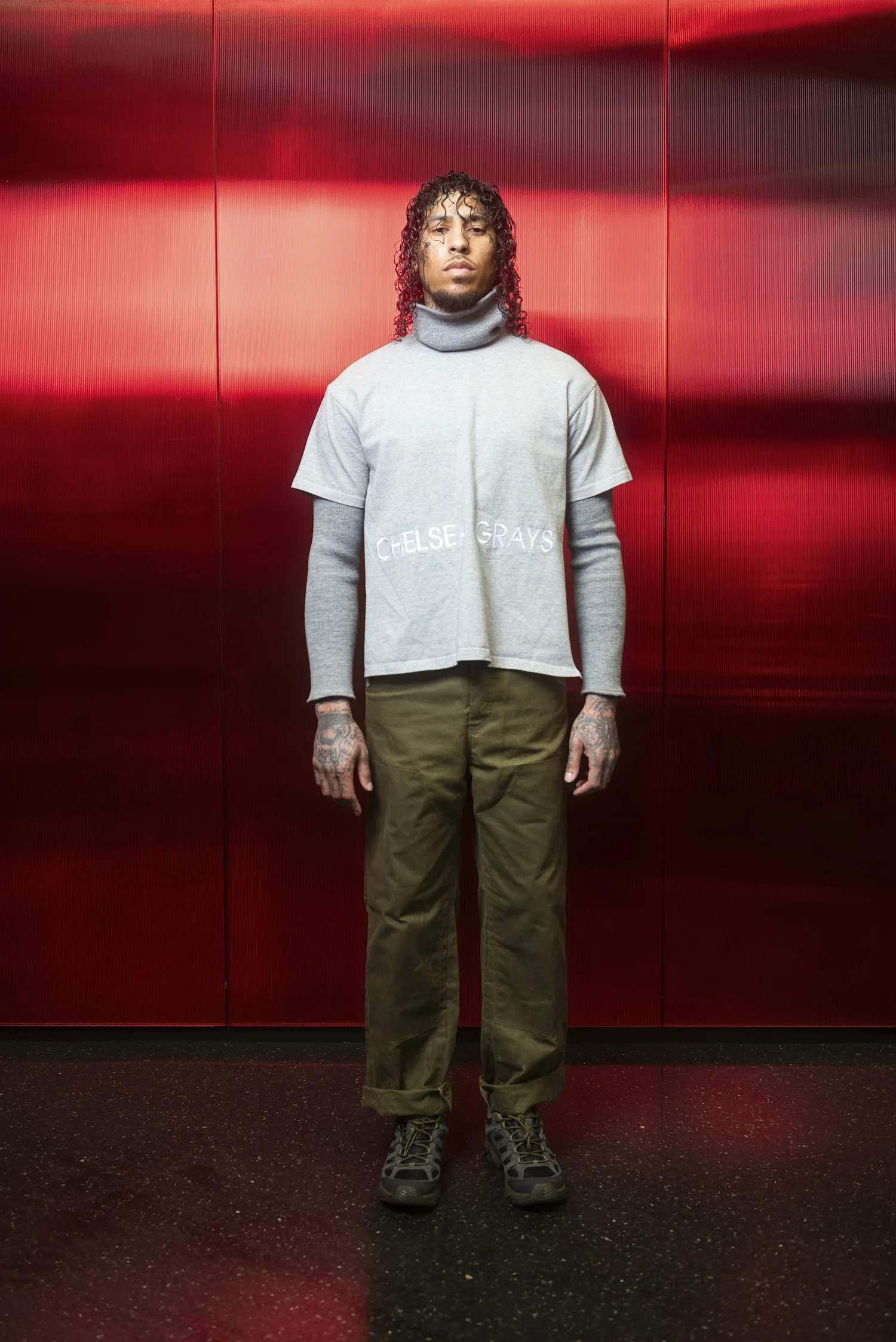
CHELSEA GRAYS approaches volume in a similar spirit, informed by different histories. Military references, workwear and the protective function of outerwear shape our proportions. Pieces such as the Technical Rain Poncho, with its oversized silhouette, angular draping and structured hood, treat volume as both shelter and statement. The garment protects, and in protecting, it gives the wearer room to move through the world on their own terms.
Gender-Fluid Tailoring Before the Industry Had a Name for It
Long before "genderless" became a marketing category, Yamamoto was cutting men's tailoring for women and softening the rigid codes of the suit. The council's citation of his "radical reimagining of womenswear" speaks to this. He treated the jacket and the coat not as markers of gender but as instruments of presence.
Gender-fluid design is central to the DNA of CHELSEA GRAYS. Our customers include menswear consumers, women who wear menswear and gender-fluid dressers who want tailoring without prescription. The Midnight Wool Overcoat, cut in heavyweight wool with peak lapels and a structured, single-breasted silhouette, is designed to be worn across bodies and occasions, over a suit or over a hoodie. Tailoring, in this view, belongs to whoever chooses to carry it with intention.
The Discipline of Black and the Value of Restraint
Yamamoto's long devotion to black is often described as an aesthetic signature. It is equally an ethical position: a refusal of spectacle that directs attention to cut, fabric and the person inside the garment. Restraint, in this sense, is not absence. It is focus.
Our primary palette of black, charcoal, off white and stone follows a related instinct. When colour recedes, construction speaks. It is why we favour quality over quantity and why our garments are designed to be worn for years rather than seasons. Restraint is also a sustainable practice. A garment that does not chase a trend does not expire with one.
Craft as the Foundation of Avant-Garde Design
The British Fashion Council framed Yamamoto's design language as one defined by innovation, craftsmanship and artistic integrity. The order is instructive. Experimentation without craft becomes costume. Craft without experimentation becomes repetition. The enduring designers hold both at once.

At CHELSEA GRAYS, hand-felting, hand-dyeing and waxed cotton are how that balance takes shape. The Felted Wool Blazer carries an abstract felted overlay in crimson, olive and black across a classic single-breasted form, a piece where tailoring and wearable art meet. For more on how we style it, read our guide on styling a luxury wool blazer for creative authority, and for the story behind our textile process, see Waxed Cotton and Hand-Dyeing: The Slow Craft Behind CHELSEA GRAYS.
What This Recognition Means for the Next Generation of Designers
Awards of this kind matter beyond the honouree. They signal to students and emerging designers which values the industry is prepared to celebrate. Recognising a career built on conviction rather than trend tells young designers that a point of view, held with patience, can endure.
That message resonates with our work in education. Chelsea Grays teaches fashion at North Carolina Central University, her alma mater, and CHELSEA GRAYS has presented at New York Fashion Week, New York Men's Day and London Fashion Week. In the classroom and on the runway, the lesson is the same: study the masters, understand why their clothes endure, then build a language that is unmistakably your own. Fashion with purpose begins with that kind of self-knowledge.
Frequently asked questions
When will Yohji Yamamoto receive the Outstanding Achievement Award?
The British Fashion Council will present the award at The Fashion Awards 2026 on 30 November 2026 at the Royal Albert Hall in London. The announcement was made on 28 October 2026.
Why is Yohji Yamamoto considered so influential?
Since founding his label in Tokyo in 1972, Yamamoto has reshaped modern dress through loose, architectural silhouettes, a disciplined use of black and tailoring that challenges gendered conventions, all grounded in deep craftsmanship.
What is gender-fluid tailoring?
Gender-fluid tailoring refers to jackets, coats, suits and trousers cut to be worn across genders, prioritising proportion, comfort and presence over traditional menswear or womenswear rules. It is a core part of the CHELSEA GRAYS design approach.
How does CHELSEA GRAYS approach oversized design?
CHELSEA GRAYS uses oversized and long-line silhouettes drawn from military, workwear and utilitarian references, pairing them with structured outerwear and hand-finished craft so that each piece feels both protective and expressive.
